

What Is BSUID in WhatsApp? A New Way to Identify Customers
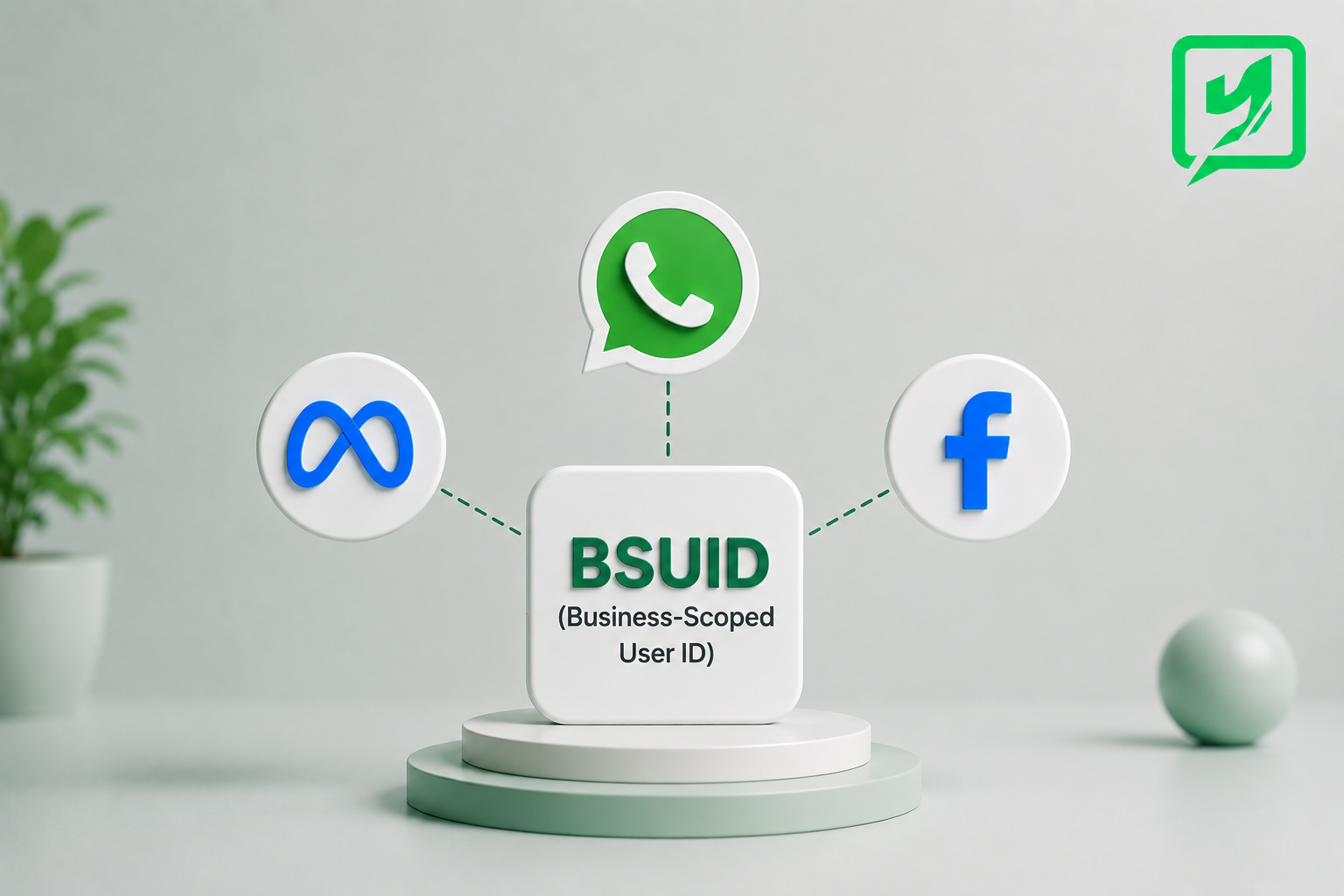
For a long time, a phone number has been the main way WhatsApp identifies users and enables communication with them. When a customer contacts a business, their phone number has traditionally been the key identifier that helps the business know who they are communicating with.
But as WhatsApp evolves and introduces usernames, the way customers are identified is changing.
Users can now choose a username instead of relying only on their phone number, creating the need for another way for businesses to recognize users even when their phone number is not available.
This is where BSUID comes in.
What Is BSUID?
BSUID stands for Business-Scoped User ID. Simply put, it is a unique identifier created by Meta to help businesses identify a user on WhatsApp.
The identifier is automatically generated by Meta's systems, so customers do not need to choose it or take any action to receive one.
Most importantly, customers do not see or need to know their BSUID. It works in the background to help businesses recognize users and manage their communication with them.
Why Did WhatsApp Introduce BSUID?
In the past, a phone number was the primary identifier systems relied on to recognize a customer.
But when a user chooses a username on WhatsApp, their phone number may not be available to the business. This created the need for another way to help businesses continue recognizing and communicating with that user.
This is where BSUID comes in as a new identifier that works behind the scenes.
In simple terms: A phone number was the primary way to identify a customer, while BSUID provides another way to recognize them when their phone number is not available.
What Happens When a Customer Uses a Username?
From the customer's perspective, not many changes.
They can choose a username and communicate with businesses without necessarily having to share their phone number.
Behind the scenes, WhatsApp uses the BSUID to help the business recognize who it is communicating with.
This means the customer experience can remain simple, while the business can continue managing the conversation and recognizing the customer in an organized way.
Is BSUID the Same as a Username?
No, and it is important to understand the difference.
A username is the name a user chooses to appear on WhatsApp, and the name other people can use to recognize them.
A BSUID, on the other hand, is an identifier automatically created by Meta that works in the background to help a business identify the user.
A simple way to think about it is: The username is visible to people, while the BSUID is used by systems.
They are therefore two different parts of the way WhatsApp is evolving how user identity works.
What Happens If a Customer Changes Their Username?
One of the important aspects of BSUID is that it does not change when a user changes their username.
A customer can change their username while their BSUID remains the same within the same business scope.
This helps businesses continue recognizing the customer without treating them as a completely new user simply because they changed their username.
However, if the customer changes their phone number, a new BSUID is generated for them.
BSUID Works Behind the Scenes
BSUID may sound like a technical term, but customers do not actually need to interact with it.
They do not need to save it, enter it, or search for it.
All they need to do is use WhatsApp as they normally would, while the identifier is created and handled automatically in the background.
This keeps the change simple for customers while giving businesses a new way to manage user identity as WhatsApp continues to evolve.
What Does This Mean for Businesses?
For businesses, BSUID represents an important change in how customer communication can be managed.
As usernames become part of WhatsApp, businesses can no longer rely only on phone numbers as the way to identify customers.
BSUID helps businesses continue recognizing users even when their phone number is not available, making the transition toward username-based communication smoother.
It also gives business systems another way to associate a customer's interactions with their identity within the business, rather than relying entirely on their phone number.
A Change Behind the Scenes, A Simpler Experience for Customers
The interesting part of this change is that most customers will never notice its complexity.
For the user, it is simple: they can use a username and communicate with businesses in a more flexible way.
For businesses and the systems managing their conversations, there is now another identifier that helps them recognize users and continue communicating with them when a phone number is not available.
The change happens behind the scenes, while the customer experience remains simple and familiar.
Conclusion
As WhatsApp evolves and usernames become part of the platform, it is moving beyond relying on phone numbers as the primary way to identify users.
BSUID (Business-Scoped User ID) is a new identifier automatically created by Meta to help businesses recognize users and communicate with them when their phone number is not available.
Customers do not need to know or interact with their BSUID. It works in the background, remains the same when a user changes their username, and a new identifier is generated if they change their phone number.
Ultimately, BSUID is not something customers need to learn or use. It is simply part of the change happening behind the scenes as WhatsApp evolves usernames and the way businesses recognize and communicate with their customers, making the experience more flexible and seamless.